


A-154
Mercedes Typewriter, 1922
Stunning German Mercedes No. 3 typewriter from 1922. Works perfectly.
Sold!
German Mercedes No. 3 Typewriter, 1922. Well-Preserved and in Perfect Working Order
This striking German typewriter is a Mercedes No. 3, well-preserved and working just as well as the day it was made. Made of iron with a black lacquer finish, it retains all its original parts and is perfectly suitable for typing. The typewriter has a solid, robust build, with a basic, rational design characteristic of German typewriters. A unique feature of this model is that its mechanism allows the keyboard to be easily removed, providing access to the interior of the machine for cleaning, repair, or adjustments. On the top, just above the carriage, there is a large inscription in beige letters displaying the model name, MERCEDES.
The keyboard consists of round keys with a white background and black letters, except for the key in the upper-left corner, which allows you to change the ink color (red or black) and is illuminated in both colors. The keys are surrounded by a thin silver circle, characteristic of typewriters of that era. On either side of the keyboard are two large medallions with inscriptions: the one on the left indicates that the Mercedes brand won a grand prize in 1910 and a gold medal in 1911, in Milan and Buenos Aires, respectively. On the right, another similar medallion indicates the machine's model: MODEL No. 3. On the back, the following inscription appears in white letters: BERLIN W.30. - MERCEDES BUREAU MASCHINEN GES.M.B.H.
The machine's frame has openings on the sides through which we can glimpse part of its internal mechanism. It is an upstrike typewriter, meaning the keys strike from above, allowing the user to see what they are typing as it appears on the paper. Mercedes typewriters were produced by the company Mercedes Büromaschinen-Werke A.G. in Berlin, and production began in 1907. Their inventor was Franz Schuller. The first version of the Mercedes No. 3 was manufactured in 1912, while the second (the model in question) was released in 1922.
Without a doubt, this Mercedes No. 3 typewriter is a highly decorative piece, worthy of a collector of early 20th-century office antiques.
30 other products in the same category:
-
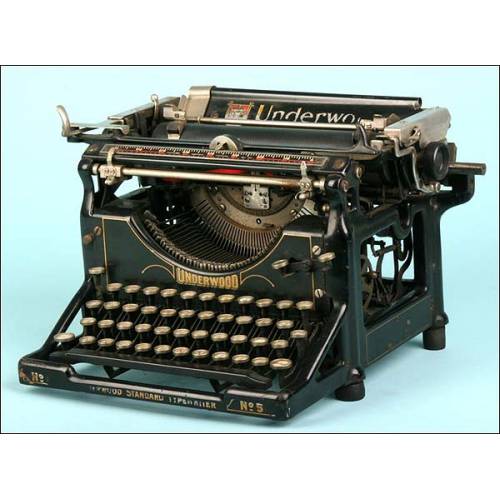
Underwood Typewriter No. 5,...
-
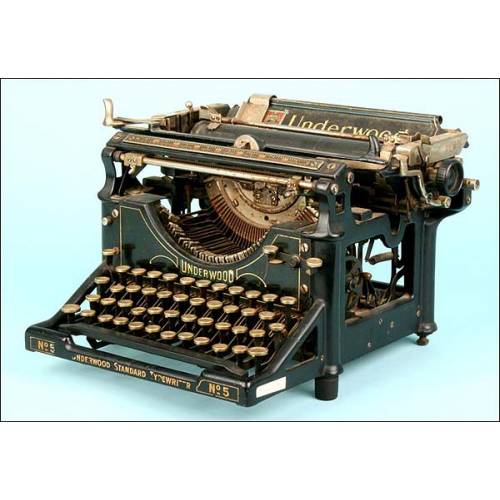
Underwood Typewriter, No....
-
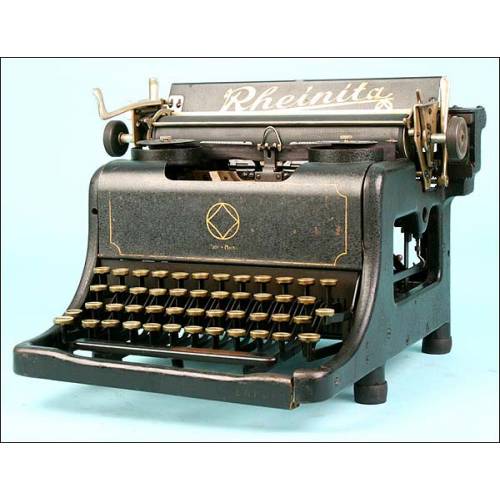
Rheinita typewriter, circa 1929
-

Ideal Model A Typewriter....
-
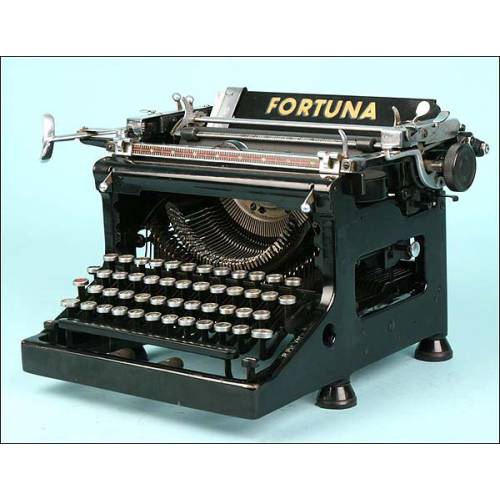
Typewriter Fortuna C.1928
-
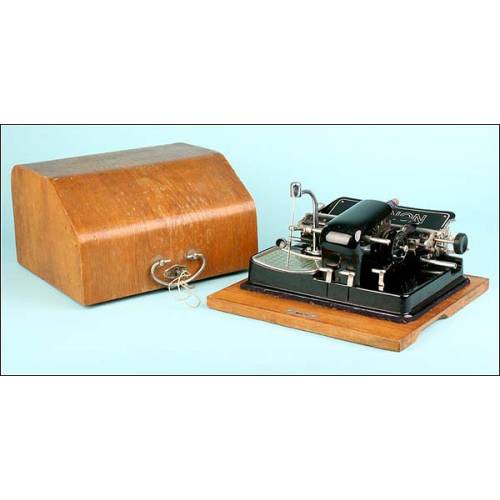
Mignon typewriter, complete...
-
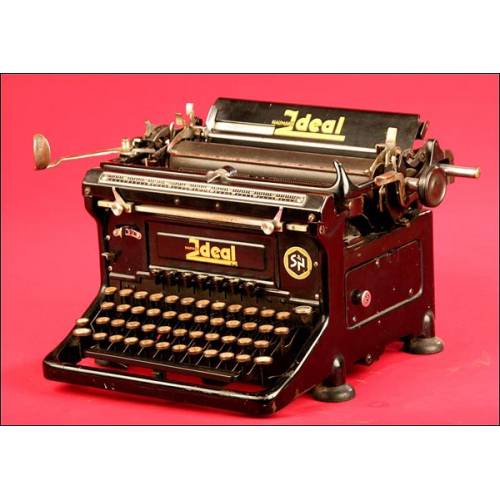
Aesthetically Perfect Ideal...
-
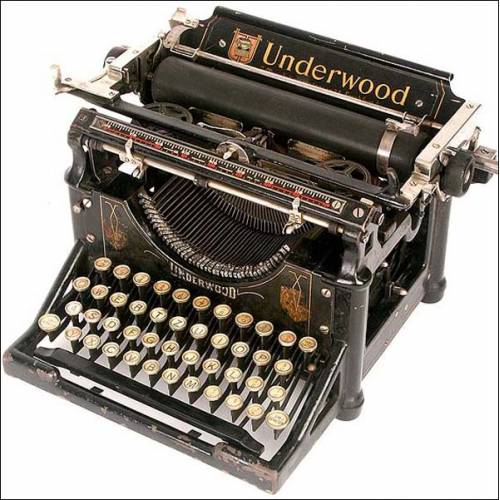
Underwood typewriter, working...
-

Beautiful Continental...
-

Elegant German Ideal D...
-

Olivetti Valentine...
-

Typewriter, 1900
-

Historic American Labeling...
-

French Typewriter, 1921
-

Ideal Typewriter, 1937
-

Culema Typewriter, 1919
-

Cummins Labeling Machine...
-

Imperial Typewriter, 1919
-

Continental Standard Typewriter
-

Rare and Exclusive Underwood...
-

Beautiful Underwood No. 5...
-

Important German Rotary...
-

Rare Fox Typewriter, United...
-

Continental Silenta Typewriter
-

Elegant German Continental...
-

Stoewer Record Typewriter, 1926
-

Royal 10 Typewriter, 1933
-

Vintage Stoewer Record...
-

Stoewer Record Typewriter, 1921
-

Simplex Typewriter, 1900