
Antique Mantel Clocks
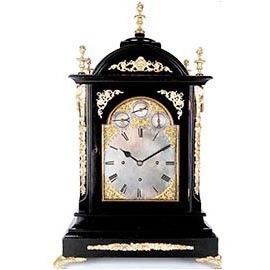
An attractively designed and well-functioning table or table clock is usually the focus of all eyes. If it is also an antique and original vintage item, then it will also become one of the most appreciated pieces by its owners. Antique table clocks have been decorating spaces for centuries; millions of homes around the world have some model tha...
An attractively designed and well-functioning table or table clock is usually the focus of all eyes. If it is also an antique and original vintage item, then it will also become one of the most appreciated pieces by its owners. Antique table clocks have been decorating spaces for centuries; millions of homes around the world have some model that measures time with silent patience.
Brief history of antique table clocks or table clocks.
The origin of table clocks (also known as antique table clocks) is somewhat fuzzy, but can be established around the 14th century. The clock mechanisms of the time were oversized and ran huge designs located in cathedrals, churches and public buildings. When the dimensions of the mechanisms were reduced by replacing the weights with a spring system, clocks moved into the domestic sphere in the form of table, wall or floor models. From that time on, table clocks were manufactured with different types of mechanisms, although they all worked on the same principle: a spring motor transmitting the movement to gears, controlled and regulated by a mechanism (pendulum, weights, escapement, etc.). The gears turn the hands at a set rate.
Types of antique table clocks
Table clocks or antique mantel clocks can be classified into different groups. We can group them according to their mechanism, their design, their style, the materials they are made of... Among the most popular and attractive ones are the following:
Table clocks with Paris movements Also known as "Pendule du Paris" or "Clock of Paris" (in France and Great Britain), this mechanism does not actually correspond to a defined typology. The name "Pendules du Paris" refers rather to the place of manufacture and/or the Parisian style than to a specific mechanism. They are usually compact, round-shaped machines, designed for small cases (such as those of table clocks). They usually include hour and half-hour chimes on a bell or gong. Paris machineries are generally found in high quality sculptural clocks, made of marble, gilt bronze, etc.
Pendulum table clocks. . The invention of the pendulum mechanism is due to the Italian physicist and astronomer Galileo Galilei, who described it in a writing in the 15th century. Later, Christian Huygens built the first pendulum clock. Antique table clocks with pendulum are usually tall, slender designs to accommodate the pendulum element, which is often seen at the bottom through a glass panel.
Sculptural table clocks. . They are magnificent period designs whose case appears decorated with stylized bronze, calamine or porcelain figures. They were very popular in the 18th and 19th centuries, especially in France. The figures usually represent gallant or mythological scenes characteristic of Romanticism. The clock mechanism was hidden in a case that served as a pedestal for the sculptures, while the dial was displayed either on the front of the case or as part of the sculptural ensemble.
Table clocks made of marble, wood and gilded bronze. The use of noble and valuable materials to make table clock boxes made these objects authentic works of craftsmanship, which to this day still maintain their great beauty and attractiveness. Wooden boxes are probably the most common, using noble species such as mahogany or ebony in the manufacture of magnificent designs. Marble was widely used in the 30s of the twentieth century to manufacture beautiful art deco style table clocks. Gilded bronze (ormolu) was widely used in the manufacture of wonderful antique table clocks during the 19th century. Empire style, combined with ebony, with sculptural figures or with marble pedestals, these clocks stand out for their elegance, their luminosity and their complicated designs.
Collecting antique table clocks is an exciting hobby, which can also be an excellent investment. Watching them in good working order and enjoying their timeless beauty on a sideboard, mantelpiece or large dining table is a real pleasure.
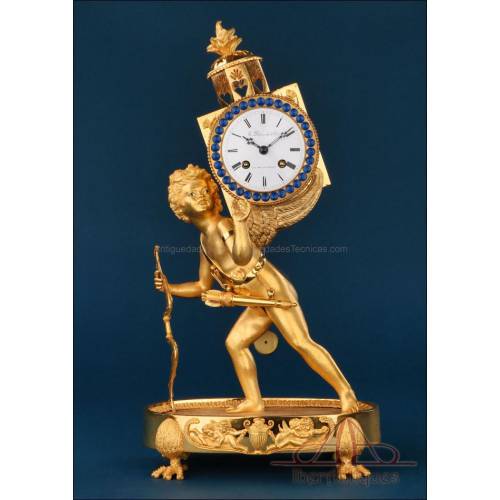
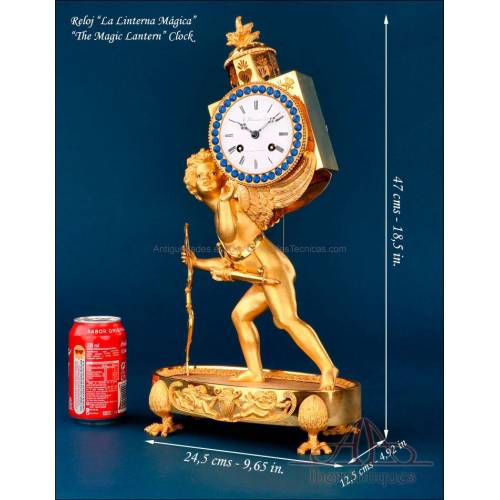
'The Magic Lantern', Antique Empire Gilded Bronze Clock, France, XIX cent. 'The Magic Lantern', Antique...
Rare French clock in mercury-gilded bronze, signed by Detouche, Paris. Eros with magic lantern. Fully restored. Circa 1850. Rare French clock in mercury-gilded...
11 000,00 €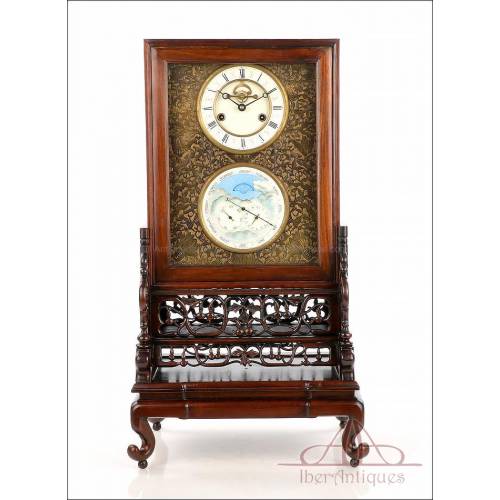
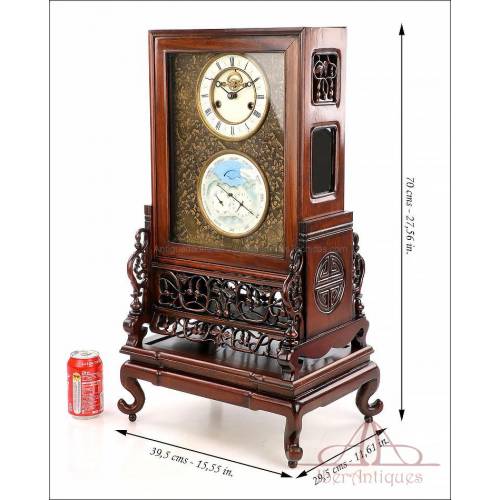
Antique English Clock for the Chinese Market with Rich Decoration and Moon Phases, Ca. 1880 Antique English Clock for the...
Majestic English clock from ca. 1880, with visible mechanism, perpetual calendar, and moon phases. Exquisite carved wood base and Chinese decoration. In pristine condition and working order. Majestic English clock from ca. 1880,...
Sold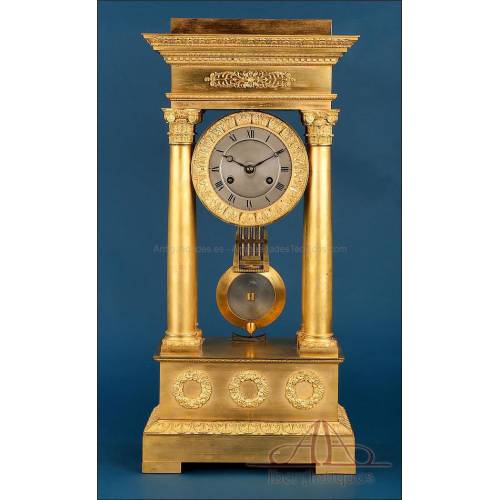
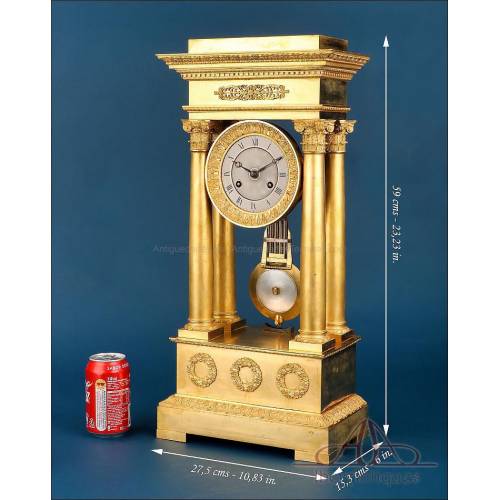
Antique Gilt Bronze Portico Clock with Four Columns. France, 19th Century Antique Gilt Bronze Portico...
Elegant gilt bronze portico clock, France, 19th century. Working condition. Elegant gilt bronze portico clock,...
2 300,00 €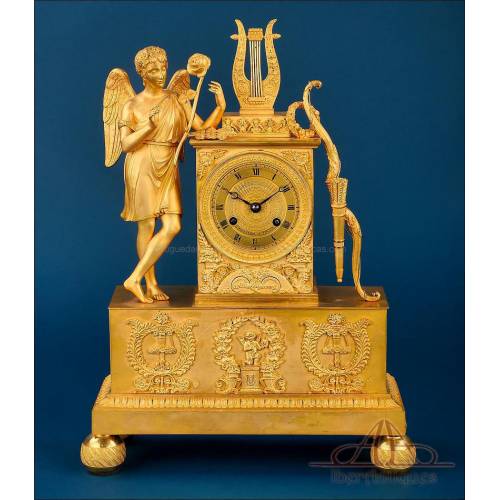
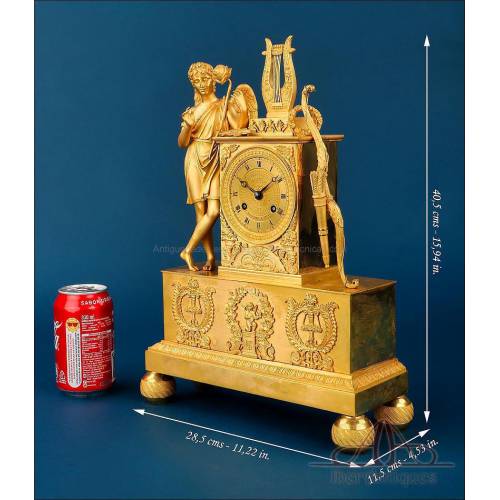
Antique Gilt Bronze Clock with Cupid. France, circa 1850 Antique Gilt Bronze Clock with...
Antique French gilt bronze clock with Cupid, circa 1850. Paris 7-day movement. Antique French gilt bronze clock with...
1 750,00 € 1 900,00 €Reduced price!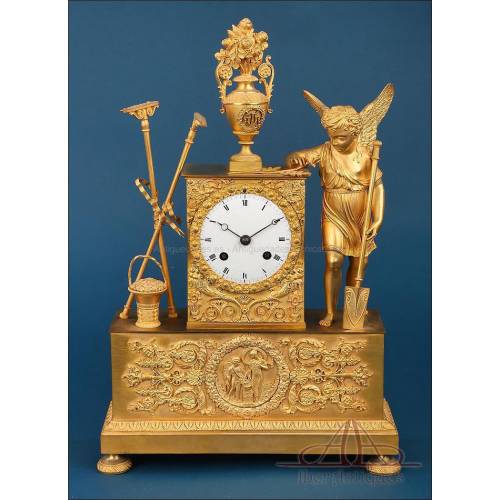
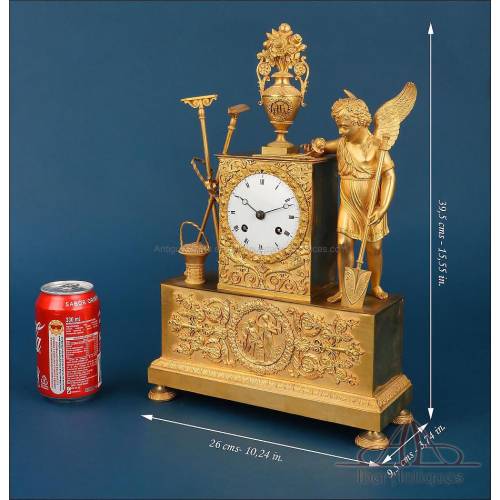
Beautiful Antique Gilt Bronze Mantel Clock. France, circa 1840 Beautiful Antique Gilt Bronze...
Elegante reloj de sobremesa de bronce dorado al mercurio, circa 1840, en perfecto estado de funcionamiento. Elegante reloj de sobremesa de bronce...
1 750,00 € 1 900,00 €Reduced price!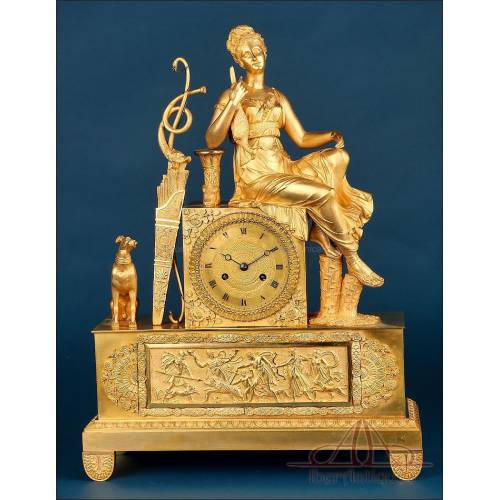
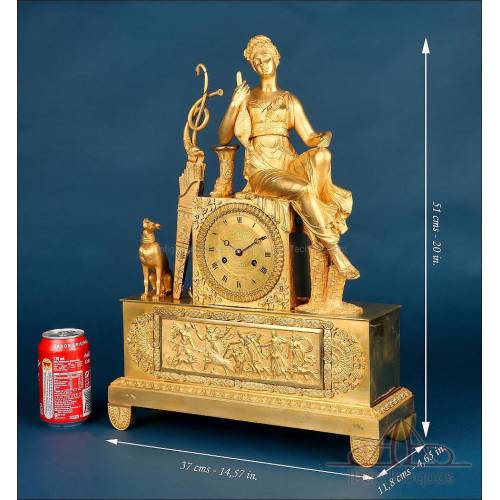
Elegant Antique Gilded Bronze Clock, France ca 1850 - Diana the Huntress Elegant Antique Gilded Bronze...
Antique French gilded bronze clock ca. 1850. Diana the Huntress seated relaxed, with bow and dog. Parisian 7-day movement, silk suspension, with original key. Antique French gilded bronze clock...
2 500,00 €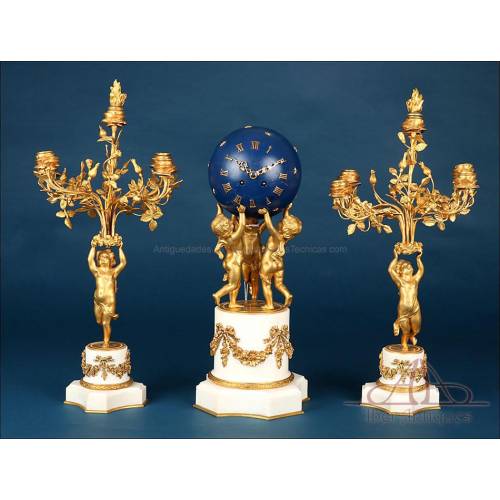
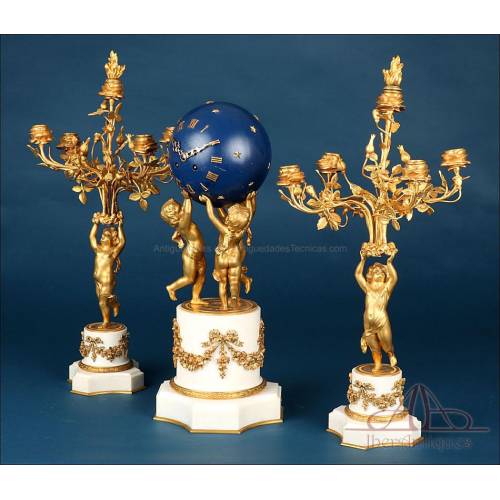
Striking Antique Charlet & Cie Mantel Clock. Ormolu. France, Circa 1900 Striking Antique Charlet & Cie...
Awesome ormolu and marble mantel clock signed by Charlet & Cie, in excellent working order. With fine candelabra set. Awesome ormolu and marble mantel...
3 950,00 € 4 800,00 €Reduced price!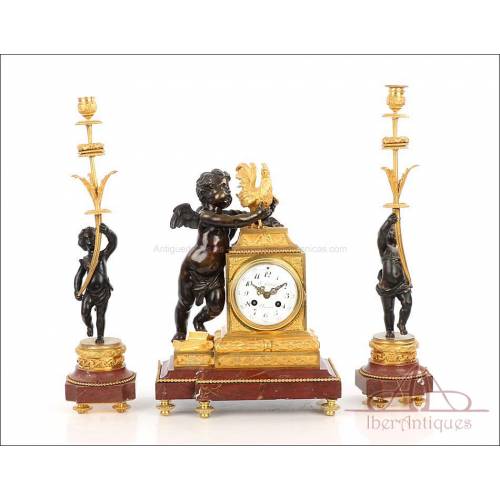
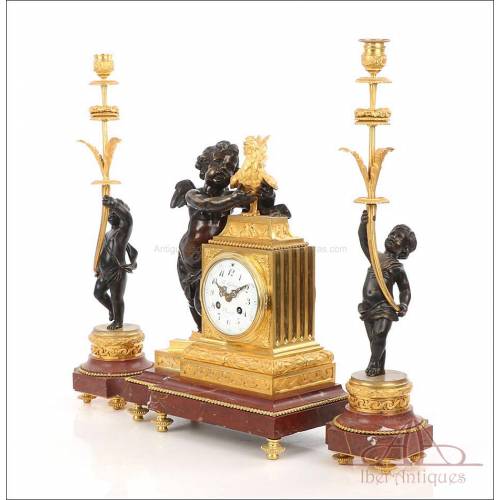
Antique French Mantel Clock. Gilt and Patinated Bronze. . France, 19th Century Antique French Mantel Clock....
Stylish sculptural clock and candelabra set. Gilt and patina-finished bronze. Hour-striking movement. Stylish sculptural clock and...
2 750,00 € 2 950,00 €Reduced price!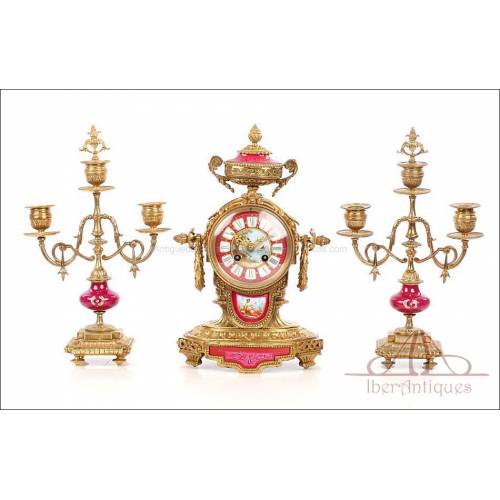
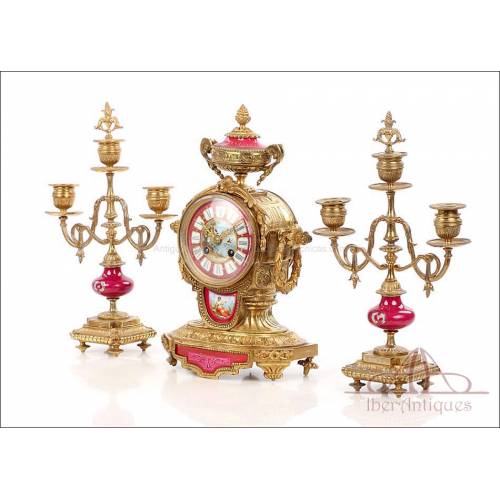
Antique Mantel Pendulum Clock and Candelabra Set. France, 19th Century Antique Mantel Pendulum Clock...
Delicate bronze and porcelain mantel clock and candelabra set. Decorated by hand. Hour-striking movement. Delicate bronze and porcelain mantel...
Sold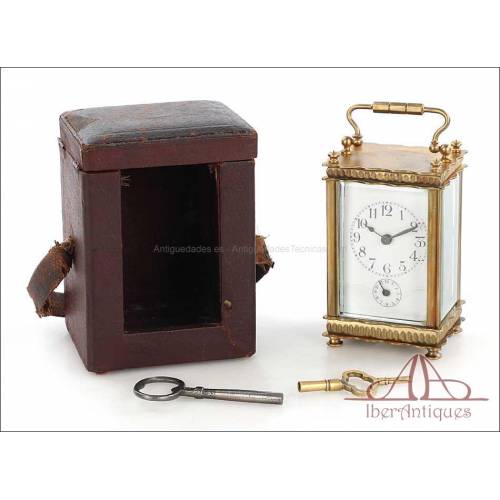
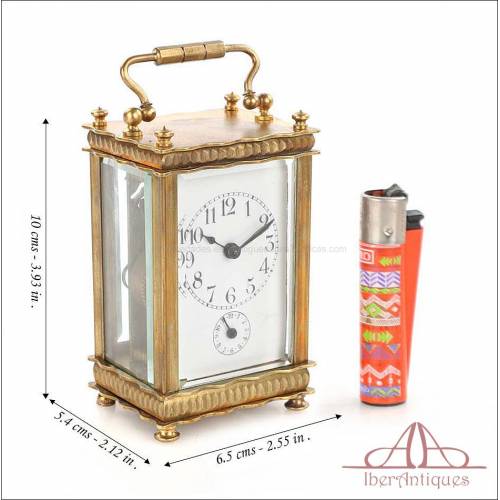
Antique Officers or Carriage Clock with Original Case. France, 19th Century Antique Officers or Carriage...
Beautiful French officers or carriage clock in good working order. With keys and case. Beautiful French officers or carriage...
420,00 € 470,00 €Reduced price!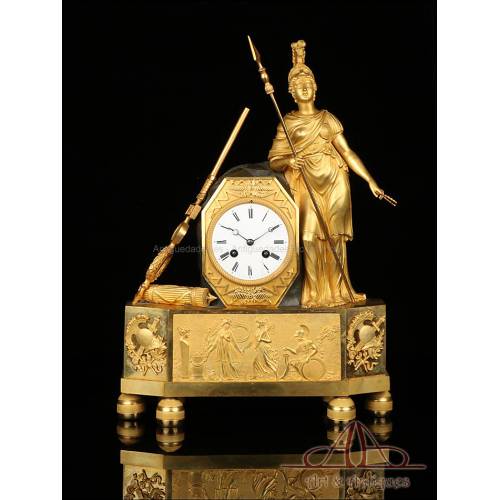
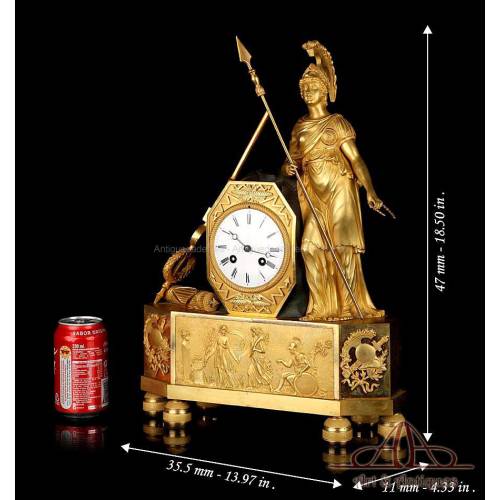
Antique Ormolu Mantel Clock. Minerva Goddess. France, Circa 1850 Antique Ormolu Mantel Clock....
Exclusive ormolu mantel clock with a figure of Minerva goddess. In very good condition and excellent working order. Exclusive ormolu mantel clock with a...
Sold
New products
-

Antique ivory and silver plated stethoscope, late 19th century
Antique stethoscope from the late 19th century in silver-plated metal...
-

Vintage pendant with shell cameo of Jesús del Gran Poder, carved c. 1970
Vintage pendant with a shell-carved cameo of Jesus del Gran Poder, circa...
-

Antique Roman Style Gilded Silver Chalice with Paten. France, 1932
Antique Roman-style chalice in gilded silver with paten. France, 1932....
-

Beautiful Antique 18 K Gold Ring with 7 Natural Diamonds
Antique 18K gold ring with 7 natural diamonds. Delicate openwork design,...
-

Antique Silver Reliquary. José Vilaplana. Valencia, Spain. Circa 1920
Impressive repoussé silver reliquary by José Vilaplana, Valencia, c....
-

Vintage 18K Gold Ring with 7 Natural Diamonds
Vintage 18K gold ring with seven natural diamonds in floral setting....
-

Antique Silver Chalice. Enameled Crosses. Valencia, Spain, 1942
Spanish chalice from 1942 in solid silver, gifted by the Church of...
-

Antique Silver Chalice and Paten. Granada Spain, circa 1900
Spanish chalice in white silver with matching paten, handcrafted....
Specials
-

Complete Silver Art Deco Flatware Set for 12. Barcelona, Circa 1920
Gorgeous complete silver Art Deco...