
Optical Antiques
Brief history of optical instruments
While there is abundant evidence that optical instruments were already in use in the ancient world, such as the famous 5000-year-old rock crystal lens of Pharaoh Semempses, the first modern lens dates back to the 16th century, when the German Lippershey attempted to patent his crystals. From this point on, Ga...
Brief history of optical instruments
While there is abundant evidence that optical instruments were already in use in the ancient world, such as the famous 5000-year-old rock crystal lens of Pharaoh Semempses, the first modern lens dates back to the 16th century, when the German Lippershey attempted to patent his crystals. From this point on, Galileo perfected the invention by creating telescopes of up to 30x magnification. The first microscope and the first sliding tube spyglasses also date from this creative period. Soon after came the eyeglasses as we know them, contact lenses and the stereoscope, progress that left behind a series of optical antiquities of great historical value.
Variety in optical antiques
If you are a lover of antiques, and in particular of antique optical instruments, in this section you will find that antique telescope you have always wanted and which may be the ideal specimen to start your collection of optical antiques. You will also find antique marine or field spyglasses, antique magnifying glasses and the rarest stereoscopes you can imagine.
All of these antique optical instruments are available in this section.
Pieces that you can discover in this section
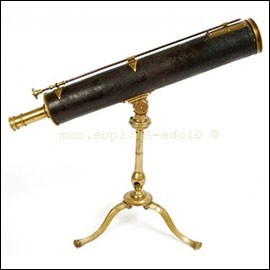
- - Antique telescopes: one of the most precious among optical antiques, here you can find antique pieces dated between the 18th and early 20th century, models that preserve their original components, for mantel, detachable, with tripod and original wooden cases.
- - Antique telescopes: one of the most precious among optical antiques, here you can find antique pieces dated between the 18th and early 20th century, models that preserve their original components, for mantel, detachable, with tripod and original wooden cases.
- - Lens cases for ophthalmologist and ophthalmologic devices: as the manufacturing of ophthalmologic devices developed, the need arose to create special cases for them. Here you will find antique cases where optical professionals kept all types of lenses, in addition to their surgical instruments.
- - Antique spyglasses and binoculars: we have both marine and field glasses and binoculars, dating from the nineteenth and early twentieth century. You can find well-known brands such as William Harris & Son or J. H. Steward, with four or five bodies, with or without tripod; indispensable pieces to build your collection of antique optical instruments.
- - Sextants and octants: these navigational instruments allow you to measure the height of the stars in relation to the sea horizon. Here you can find precious pieces from the early 19th century and mid-20th century.
- - Antique stereoscopes and stereoviewers: also known as "stereoscopic viewers", we have pieces from the early twentieth century, both magnetic and automatic, from prestigious brands such as Educa, Planox, Le Multiphote, French-made, all very well preserved and with lenses of the time.
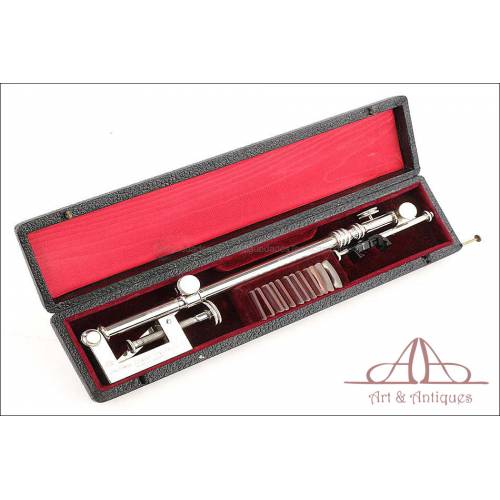
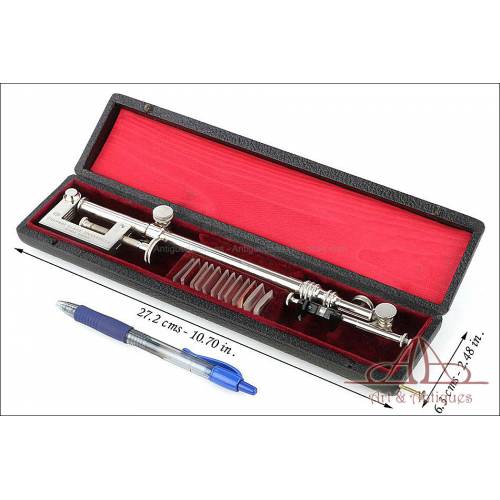
Antique Berville Universal Camera Lucida. France, Early 20th Century Antique Berville Universal...
Striking and complete Berville universal camera lucida. In its original storing case. With a complete set of lenses in use condition. Striking and complete Berville...
Sold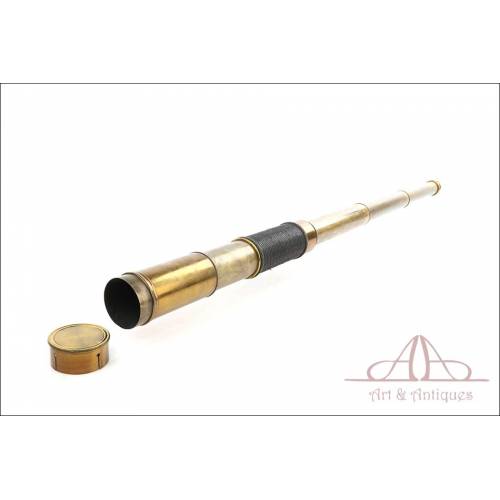
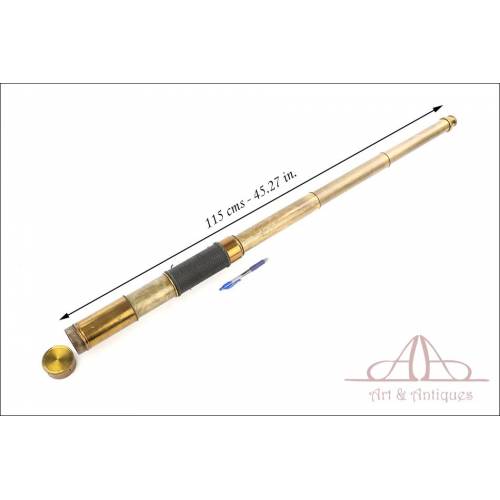
Antique Large 42 in. Marine Spyglass. Circa 1850 Antique Large 42 in. Marine...
Beautiful big-sized ship telescope. In fine condition. With sunshade and complete. Beautiful big-sized ship telescope....
Sold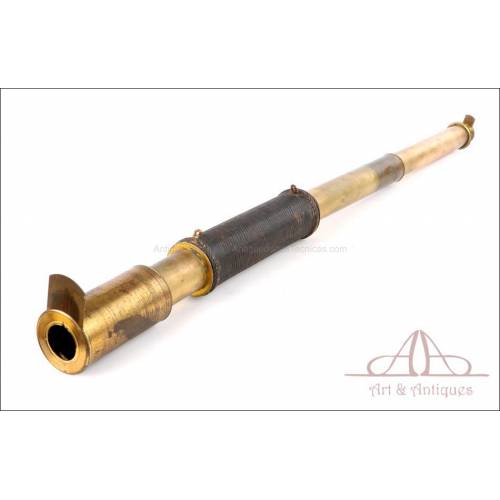
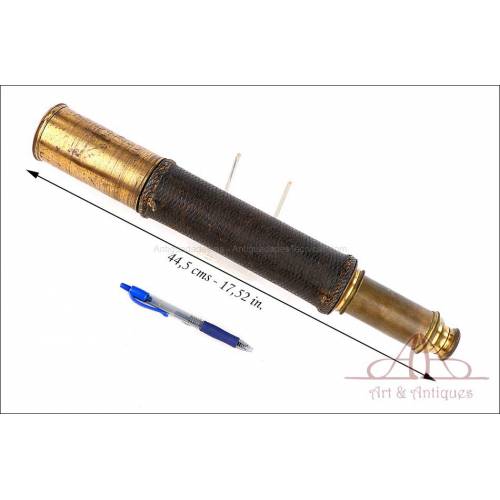
Antique Large Brass Marine Spyglass. 35.6 in. Circa 1850 Antique Large Brass Marine...
Superb large marine spyglass with sunshade and sliding lids. Working very well. Great magnification. Superb large marine spyglass with...
Sold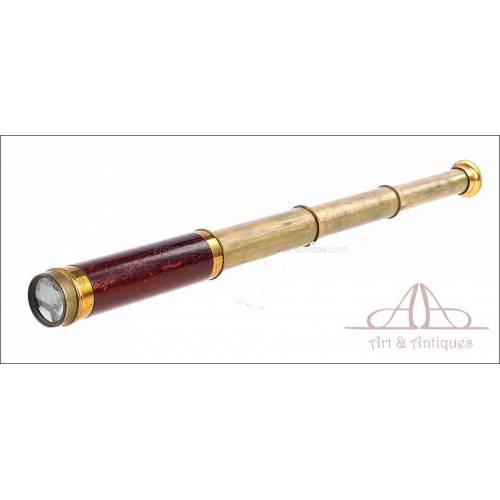
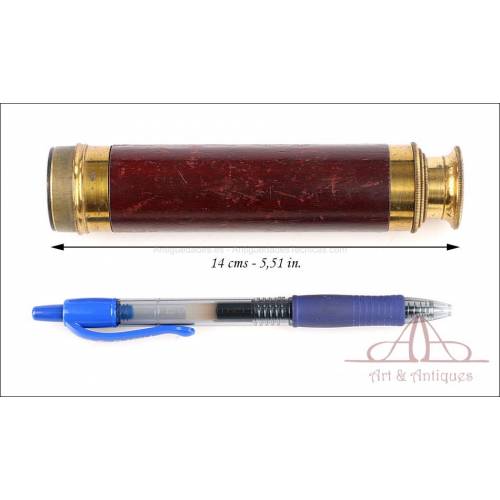
Antique Brass Field Spyglass. France, Circa 1900 Antique Brass Field Spyglass....
Fine antique brass and mahogany spyglass. In good working order. Fine antique brass and mahogany...
Sold
New products
-

Antique ivory and silver plated stethoscope, late 19th century
Antique stethoscope from the late 19th century in silver-plated metal...
-

Vintage pendant with shell cameo of Jesús del Gran Poder, carved c. 1970
Vintage pendant with a shell-carved cameo of Jesus del Gran Poder, circa...
-

Antique Roman Style Gilded Silver Chalice with Paten. France, 1932
Antique Roman-style chalice in gilded silver with paten. France, 1932....
-

Beautiful Antique 18 K Gold Ring with 7 Natural Diamonds
Antique 18K gold ring with 7 natural diamonds. Delicate openwork design,...
-

Antique Silver Reliquary. José Vilaplana. Valencia, Spain. Circa 1920
Impressive repoussé silver reliquary by José Vilaplana, Valencia, c....
-

Vintage 18K Gold Ring with 7 Natural Diamonds
Vintage 18K gold ring with seven natural diamonds in floral setting....
-

Antique Silver Chalice. Enameled Crosses. Valencia, Spain, 1942
Spanish chalice from 1942 in solid silver, gifted by the Church of...
-

Antique Silver Chalice and Paten. Granada Spain, circa 1900
Spanish chalice in white silver with matching paten, handcrafted....
Specials
-

Album with 12 gramophone records almost all in Catalan. 78 rpm. Sardanas and songs
Sardanas and catalan songs mainly,...