
Art and Painting
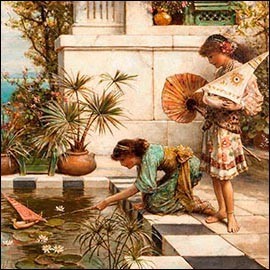
In this section you will find a carefully selected range of antique art and painting for sale, including antique painting, contemporary painting, antique engravings, antique maps, sculptures and carvings, drawings, watercolours, oil paintings, bronzes, spelter figures, documented ivory pieces, graphic art and other artistic objects from differen...
In this section you will find a carefully selected range of antique art and painting for sale, including antique painting, contemporary painting, antique engravings, antique maps, sculptures and carvings, drawings, watercolours, oil paintings, bronzes, spelter figures, documented ivory pieces, graphic art and other artistic objects from different periods and styles.
Art and antique, contemporary and decorative painting
Art and painting occupy a fundamental place within the collecting of antiques and decorative objects. A work of art does not only beautify a space: it also preserves history, technique, aesthetic sensitivity, cultural value and, in many cases, the unique character of a piece created by an artist or craftsman with true skill.
The interest of these pieces is not limited to their decorative value. Each painting, sculpture, engraving or antique map may be connected with an artistic school, a specific technique, a historical period, an artist, a workshop, a city, an aesthetic tradition or a particular way of understanding the world.
The value of antique art and painting
Antique art has a special value because it allows us to preserve and enjoy works created in past periods. Paintings, sculptures, maps, engravings and drawings are material witnesses to the history of taste, technique, visual culture and decoration.
Many antique works of art were created for churches, palaces, private homes, academies, workshops, publishers, private collections or decorative projects. Some had a religious purpose, while others were documentary, artistic, scientific, commemorative, decorative or purely aesthetic.
The value of a work of art depends on many factors: period, artist, school, technique, support, material, artistic quality, state of preservation, signature, attribution, provenance, rarity, dimensions, frame, patina, documentation and visual appeal.
Main types of art and painting
Antique painting
Antique painting is one of the most appreciated areas within art collecting. It includes old paintings, oil paintings, drawings, watercolours, religious painting, portraits, landscapes, still lifes, genre scenes, early period painting and works from the 18th, 19th and early 20th centuries.
An antique painting can bring history, elegance and aesthetic depth to any collection or decorative space. Its interest depends on period, technique, school, pictorial quality, state of preservation, signature, attribution, frame, provenance and visual strength.
Contemporary painting
Contemporary painting brings together works created from the 20th century to the present day. It includes modern painting, contemporary paintings, oil paintings, drawings, watercolours, abstract, figurative, expressionist, informalist, pop, hyperrealist and independent artist works.
These works are especially suitable for current collections and modern decorative projects. Their value may depend on the artist, signature, technique, support, dimensions, career, provenance, artistic quality, visual strength and ability to transform a space.
Antique engravings
Antique engravings form an essential part of art on paper. Etchings, lithographs, woodcuts, aquatints, photogravures, drypoints, religious engravings, portraits, urban views, scientific plates and antique graphic works offer a very attractive way to collect art.
Antique engraving combines technique, history and image. Its interest increases when it preserves a good impression, antique paper, margins, inscription, signature, colouring, provenance, rarity and a good state of preservation.
Antique maps
Antique maps and antique cartography are pieces of great historical and decorative value. They represent countries, cities, regions, continents, sea routes, coasts, antique atlases, urban plans and different ways of understanding the world in each period.
An antique map can be especially interesting because of its cartographer, engraver, publisher, territory represented, date, rarity, quality of impression, colouring, atlas provenance, margins and state of preservation.
Sculptures and carvings
Sculptures and carvings bring volume, presence and character to artistic collecting. This category includes antique bronzes, spelter figures, wood carvings, religious sculptures, busts, decorative figures, documented antique ivory pieces, marble, alabaster, terracotta and contemporary sculptures.
The value of a sculpture depends on its material, period, artist, signature, quality of modelling or carving, patina, state of preservation, base, provenance, documentation and decorative strength.
Art for collecting, investment and decoration
Art can be acquired for many reasons: personal taste, historical interest, decoration, collecting or long-term investment. A good work of art has the ability to bring beauty, personality and depth to a space, while also preserving its own cultural and material value.
It is not necessary to acquire works by great international masters to enjoy art collecting. There are antique paintings, drawings, engravings, maps, sculptures and contemporary works of great interest, with very varied prices and possibilities for different types of collectors.
The important thing is to choose authentic, well-preserved, aesthetically attractive pieces that suit personal taste or the meaning of the collection. A well-selected work can become the centrepiece of a living room, office, library, gallery, display cabinet or complete decorative project.
How to choose a work of art
When buying antique art, contemporary painting, engravings, maps or sculptures, it is advisable to assess different aspects. Authenticity, period, state of preservation, technique, support, material, signature, attribution, provenance and artistic quality are essential elements.
It is also important to consider the intended destination of the piece. A work for a specialised collection is not chosen in the same way as a painting for a living room, a map for an office, a sculpture for a library or an engraving for a decorative gallery.
Professional advice is especially useful when dealing with antique pieces, signed works, attributions, delicate materials, documented ivory pieces, original maps, period engravings or paintings that require a more precise technical assessment.
Buying art and painting at Antiguedades.es
At Antiguedades.es, we select art and painting for sale with special attention to authenticity, period, artistic quality, technique, state of preservation, material, signature, attribution, provenance, rarity and decorative value.
If you are looking for antique painting, contemporary painting, antique engravings, antique maps, sculptures and carvings, drawings, watercolours, oil paintings, bronzes, spelter figures, documented ivory pieces or antique graphic art, we recommend visiting this section frequently, as our catalogue is periodically updated with new additions.
If you have any questions about a work, need additional photographs, precise measurements or information about its technique, period, artist, signature, attribution, condition, provenance, material, documentation or decorative possibilities, please contact us. We will be happy to help you find the work of art best suited to your collection, living room, office, library, gallery, display cabinet or decorative project.
Subcategories
Antique painting
In this section you will find a carefully selected range of antique paintings for sale, including old paintings, antique oil paintings, antique drawings, watercolours, religious paintings, portraits, landscapes, genre scenes, still lifes, early period paintings and works from the 18th, 19th and early 20th centuries.
Antique paintings and collectible old paintings
Antique painting occupies an important place within the collecting of art and antiques. Old paintings, oils, drawings, watercolours and works from different periods allow us to approach the history of art through real pieces, created with the techniques, styles and sensibilities of each period.
The interest of these pieces is not limited to their age. An antique painting may have artistic, historical, decorative, documentary and collector’s value. Its technique, support, school, subject, frame, state of preservation, signature, attribution or provenance can make it an especially attractive work for collectors, decorators and art lovers.
The value of antique painting
Antique painting has a special fascination because it preserves the vision of another period. Each old painting reflects a different way of understanding beauty, composition, light, colour, the human figure, religion, nature, portraiture or everyday life.
Many antique paintings were created for churches, chapels, palaces, private homes, institutions, academies or private collections. Some had a devotional function, while others were decorative, commemorative, family-related, academic or purely artistic.
The value of an antique painting depends on many factors: period, artist, school, technique, support, pictorial quality, state of preservation, subject represented, measurements, frame, signature, attribution, provenance and rarity. Its visual strength and ability to fit into a collection or decorative space are also very important.
Types of antique painting
Antique oil paintings
Antique oil paintings are one of the most appreciated types within the antique art market. Oil painting allows great richness of colour, depth, glazes, nuances and textures, which made it one of the main techniques of European painting for centuries.
There are antique oil paintings on canvas, panel, copper, cardboard and other supports. They may represent religious scenes, portraits, landscapes, still lifes, mythological scenes, seascapes, architecture, animals or genre subjects.
Old paintings
Old paintings may include works of different techniques, periods and styles. This term covers oil paintings, watercolours, drawings, pastels, gouaches and other framed works or pieces intended for display.
Their interest depends both on the quality of the work and on its age, state of preservation, subject, frame, school, authorship, signature or decorative appeal. A good old painting can bring character, history and elegance to any room.
Antique drawings
Antique drawings have a special charm because they show the artist’s hand in a very direct way. They may be made in pencil, charcoal, ink, red chalk, wash, pastel or other techniques on paper.
Many antique drawings were preparatory studies, academic sketches, portraits, drafts, religious scenes, anatomical studies, landscapes or independent compositions. They are very interesting pieces for collectors of works on paper and lovers of the creative process.
Antique watercolours
Antique watercolours stand out for their transparency, delicacy and luminosity. They were widely used to represent landscapes, urban views, travel scenes, flowers, interiors, portraits and quick studies from life.
Their preservation requires special care, as paper and pigments can be sensitive to light and humidity. When well preserved, antique watercolours are works of great beauty and are very easy to integrate into classical or contemporary decoration.
Antique religious painting
Antique religious painting forms an essential part of the history of European art. For centuries, churches, convents, chapels and private devotions commissioned works dedicated to Christ, the Virgin, saints, martyrs, angels, biblical scenes and episodes of religious life.
These works may have great devotional, artistic and historical value. Their interest increases when they preserve good pictorial quality, clear iconography, an antique frame, religious provenance, inscription, signature, attribution or connection with a particular school.
Antique portraits
Antique portraits allow us to approach people, fashions, gestures, clothing and settings from other periods. They may represent nobles, bourgeois sitters, military figures, religious figures, children, married couples, anonymous people or historical figures.
Antique portraiture is highly valued for its decorative and documentary strength. The quality of the face, expression, clothing, accessories, background, composition and frame can make it a piece of great presence.
Antique landscapes
Antique landscapes show the evolution of the artistic gaze towards nature, the city, the countryside, the sea, mountains or architecture. They may be real, idealised, romantic, genre, academic or naturalist landscapes.
This type of antique painting is especially appreciated for its decorative capacity. An antique landscape can bring depth, serenity, colour and atmosphere to living rooms, offices, libraries, dining rooms and collection spaces.
Antique still lifes
Antique still lifes represent fruit, flowers, food, ceramics, metals, glass, books, instruments or other carefully arranged objects. They are works in which composition, light, textures and detail play a fundamental role.
Antique still lifes are highly appreciated for their decorative beauty and their connection with the European pictorial tradition. They fit especially well in dining rooms, kitchens, living rooms, libraries and spaces with a classical atmosphere.
Early period painting
Early period painting usually refers to antique works created especially between the 15th, 16th, 17th and 18th centuries. This group includes religious painting, portraits, mythological scenes, still lifes, panels, canvases and works linked to European schools such as Spanish, Italian, Flemish, French or Dutch painting.
Early period paintings are especially interesting because of their age, technique, iconography and connection with great artistic traditions. Works from the 16th century are rarer and more difficult to find, while paintings from the 17th and 18th centuries appear more frequently on the antique art market.
In this type of painting, it is important to assess the support, technique, restoration, state of preservation, quality of execution, school, attribution, frame and provenance. These works may have great historical and museum value.
Antique painting by period
15th-century antique painting
Painting from the 15th century is marked by the transition between the medieval world and the Renaissance. In Europe, Gothic forms still coexist with growing attention to perspective, volume, colour and the observation of reality.
Works from this period are usually scarce, highly sought after and of great historical interest. Religious themes are predominant, especially in panels, altarpieces, Virgins, saints and biblical scenes.
16th-century antique painting
The 16th century was a fundamental period for European painting. The Renaissance reached extraordinary maturity, and the human figure, perspective, landscape, anatomy and composition acquired decisive importance.
In Spain, Italy, Flanders and other artistic centres, schools of enormous quality developed. 16th-century antique painting is usually especially appreciated for its rarity, age and connection with a key moment in the history of art.
17th-century antique painting
During the 17th century, Baroque painting reached enormous strength. The use of light, chiaroscuro, movement, theatricality, emotion and realism gave rise to works of great visual intensity.
Religious painting, portraits, still lifes, genre scenes and major civil or ecclesiastical commissions played a very important role. The Spanish, Italian, Flemish and Dutch schools offer examples of enormous quality in this century.
18th-century antique painting
The 18th century combines Baroque influences with Rococo taste, court painting, portraiture, gallant scenes, late religious painting, landscape and the first changes towards a more modern sensibility.
18th-century antique painting can be very decorative because of its colour, elegance and variety of subjects. In many cases, it still preserves great craftsmanship and a clear connection with religious, aristocratic or bourgeois commissions.
19th-century painting
19th-century painting offers an enormous variety of styles and subjects. Romanticism, academicism, realism, naturalism, Orientalism, history painting, genre painting, landscape painting and the beginnings of modernity coexist throughout this century.
It is one of the most common periods in the antique painting market. 19th-century paintings are highly appreciated for their technical quality, decorative strength and ability to connect with classical, bourgeois, romantic or naturalist tastes.
Early 20th-century painting
Early 20th-century painting often maintains a direct connection with the 19th-century tradition, but also opens the way to more modern languages. Landscapes, portraits, urban scenes, still lifes, regionalist painting and school works remain highly sought after.
These pieces can be especially attractive because of their balance between age, modernity, artistic quality and decorative value.
Buying antique paintings at Antiguedades.es
At Antiguedades.es, we select antique paintings for sale with special attention to authenticity, period, technique, support, state of preservation, artistic quality, subject, signature, attribution, frame, provenance and decorative value.
If you are looking for old paintings, antique oil paintings, antique drawings, watercolours, religious painting, portraits, landscapes, still lifes, early period painting, 19th-century painting or antique art for sale, we recommend visiting this section frequently, as our catalogue is periodically updated with new additions.
If you have any questions about a work, need additional photographs, precise measurements or information about its condition, technique, support, period, school, signature, attribution, frame or provenance, please contact us. We will be happy to help you find the antique painting best suited to your collection, living room, office, library, dining room, gallery or decorative project.

Contemporary Painting
In this section you will find a carefully selected range of contemporary painting for sale, including contemporary paintings, modern oil paintings, contemporary drawings, watercolours, abstract works, figurative painting, modern art, mid-20th-century painting, school works and signed decorative pieces by artists from different periods and backgrounds.
Contemporary painting and collectible modern art
Contemporary painting offers a very wide field for collectors, decorators and art lovers. This term includes works created from the 20th century to the present day, with highly varied styles, techniques and artistic languages: abstract, figurative, expressionist, surrealist, informalist, pop, hyperrealist, geometric, material-based painting or independent artist works.
The interest of contemporary painting is not limited to its decorative value. Each work may reflect a personal search, an artistic movement, an aesthetic sensitivity, a specific period or a particular way of interpreting reality. For this reason, contemporary art is especially attractive both for private collections and interior design projects.
What we mean by contemporary painting
The term contemporary generally refers to what belongs to the present time. However, within the art market, the expression contemporary painting is commonly used to refer to works created from the early 20th century to the present day.
In many cases, the terms contemporary painting, modern painting and modern art are used in a similar way, although they do not always mean exactly the same thing. In commercial and collector use, they often group together works that move away from traditional academic painting and are linked to the new artistic languages developed during the 20th century.
The arrival of abstraction, Cubism, Expressionism, Surrealism, Informalism, Pop Art and other movements deeply changed the way painting was understood. From that moment on, colour, form, matter, gesture, composition and creative freedom acquired a fundamental role.
The value of contemporary painting
Contemporary painting has a special value because it allows us to live with works close to our current sensitivity. Unlike antique painting, many contemporary works are directly connected with modern life, the city, psychology, abstraction, social criticism, formal experimentation or the artist’s personal expression.
The value of a contemporary work depends on many factors: artist, period, technique, artistic quality, dimensions, signature, artist’s career, provenance, state of preservation, uniqueness, visual strength and decorative capacity. It is also important whether it is an original work, a signed piece, a school work or a creation linked to a specific artistic movement.
Buying contemporary painting should not be understood only as an investment. It is also a way to enjoy art in everyday life. A work that moves us, fits a space or expresses a personal sensitivity can become a key piece within a collection or decoration.
Types of contemporary painting
Contemporary oil paintings
Contemporary oil paintings are one of the most valued techniques within modern and contemporary art. Oil painting allows artists to work with intense colour, texture, glazes, matter, depth and great expressive richness.
There are abstract, figurative, expressionist, landscape, urban, portrait, modern still life and free-composition contemporary oil paintings. They are especially suitable for living rooms, offices, galleries, studios, hotels, restaurants and contemporary decorative spaces.
Contemporary paintings
Contemporary paintings may include very different techniques and styles. This term includes oil paintings, acrylics, mixed media, watercolours, drawings, collages, gouaches, works on canvas, panel, paper, cardboard or other supports.
Their appeal depends on artistic quality, composition, colour, visual strength, format, signature, period and the ability of the work to dialogue with the space where it is displayed. A good contemporary painting can completely transform a room.
Contemporary drawings
Contemporary drawings show the line, gesture and sensitivity of the artist in a direct way. They may be made in pencil, ink, charcoal, pastel, marker, red chalk, mixed media or other techniques on paper.
They are very interesting works for collectors of art on paper, artist studies, sketches, portraits, abstractions, figurative compositions and small or medium-format pieces. They often bring great closeness to the creative process.
Contemporary watercolours
Contemporary watercolours stand out for their lightness, transparency and luminosity. This technique allows artists to create delicate, spontaneous and highly decorative works, whether figurative or abstract.
Modern and contemporary watercolours may represent landscapes, urban scenes, interiors, flowers, portraits, abstract compositions or travel sketches. They are especially suitable for elegant, bright and serene interiors.
Contemporary abstract painting
Contemporary abstract painting is one of the great protagonists of modern art. In it, the work does not seek to faithfully represent reality, but to express itself through colour, form, texture, rhythm, balance, contrast and composition.
Contemporary abstract paintings may be gestural, geometric, material-based, lyrical, minimalist or expressive. They are highly appreciated for their decorative strength and their ability to adapt to modern, classical or eclectic interiors.
Contemporary figurative painting
Contemporary figurative painting maintains a reference to reality, although it may interpret it in very different ways. Portraits, human figures, landscapes, urban scenes, interiors, still lifes and symbolic compositions form part of this group.
Contemporary figuration may be realistic, expressionist, poetic, critical, intimate or close to drawing. Its interest lies in the way the artist transforms the visible world into a personal and recognisable work.
20th-century modern painting
20th-century modern painting brings together works linked to a period of enormous artistic renewal. During this century, movements such as Fauvism, Expressionism, Cubism, Futurism, Dadaism, Surrealism, Abstraction, Informalism, Pop Art, Abstract Expressionism and Hyperrealism emerged.
Over the decades, many styles coexisted. Some artists followed specific schools, while others developed their own language. This diversity is precisely one of the great riches of contemporary art.
Original works and artistic reproductions
Within contemporary painting, it is important to distinguish between an original work and a reproduction. An original work is created directly by the artist, normally on canvas, panel, paper or another support, and may be signed, dated or documented.
Original works usually have greater collector interest, especially when they belong to recognised artists, show good artistic quality or preserve information about their provenance. A unique work always has a special presence, because there is no other exactly like it.
Artistic reproductions, quality copies or interpretations made by painters with good technique may also be found. These pieces can have decorative and aesthetic value, although their consideration within the market is usually different from that of a signed original work.
Contemporary painting for collecting and decoration
Contemporary painting is especially suitable for creating spaces with personality. Its formats, colours, textures and compositions allow it to be integrated into living rooms, offices, libraries, bedrooms, galleries, restaurants, hotels, workplaces, professional studios and interior design spaces.
A contemporary painting can bring colour, balance, contrast, modernity, visual strength or serenity. Some works function as the main piece in a room, while others complete a collection or accompany furniture, sculptures, antiques and decorative objects.
The choice of a contemporary painting depends both on personal taste and on the space where it will be placed. Size, colour, style, frame, technique and visual intensity are important aspects to achieve good decorative integration.
Buying contemporary painting at Antiguedades.es
At Antiguedades.es, we select contemporary painting for sale with special attention to artistic quality, authenticity, technique, support, state of preservation, signature, period, dimensions, provenance, visual strength and decorative value.
If you are looking for modern painting, contemporary paintings, contemporary oil paintings, drawings, watercolours, abstract painting, figurative painting, modern art, original works or signed decorative pieces, we recommend visiting this section frequently, as our catalogue is periodically updated with new additions.
If you have any questions about a work, need additional photographs, precise measurements or information about its technique, support, signature, condition, period, artist, provenance or decorative possibilities, please contact us. We will be happy to help you find the contemporary painting best suited to your collection, living room, office, gallery, workplace or decorative project.
Antique Engravings
In this section you will find a carefully selected range of antique engravings for sale, including antique etchings, antique lithographs, antique woodcuts, photogravures, aquatints, drypoints, religious engravings, urban views, maps, portraits, historical scenes, scientific plates, decorative engravings and other antique graphic works.
Antique engravings and collectible old graphic art
Antique engravings form one of the most interesting areas of collecting art on paper. They are works that allow us to approach the history of art, illustration, cartography, science, religion, architecture, portraiture, landscape and everyday life through printing and engraving techniques used for centuries.
The interest of antique engravings is not limited to their decorative value. Many were made by artists, engravers, printers, workshops and publishers of great quality, and some reproduce works by great masters or document events, cities, figures, monuments, customs and knowledge from a particular period.
The value of antique engravings
Antique engravings have a special appeal because they combine art, technique and history. Unlike a unique painting, engraving and printmaking made it possible for centuries to reproduce images and disseminate them among a wider public, becoming a fundamental tool of European visual culture.
Thanks to engraving, religious images, portraits of important figures, maps, city views, scientific treatises, historical scenes, book illustrations, architectural models, ornamental compositions and reproductions of famous paintings were widely circulated.
The value of an antique engraving depends on many factors: period, technique, artist, engraver, publisher, subject represented, rarity, state of preservation, quality of impression, paper, margins, colouring, provenance, inscription, signature, original plate and visual appeal.
Main antique engraving techniques
Antique etchings
Antique etchings are one of the most appreciated techniques within engraving and printmaking. The process consists of covering a metal plate with an acid-resistant ground and drawing on it with a point, exposing the areas that will later be bitten by the acid.
This technique allows for a free, expressive line, very close to drawing. It was used by great artists and engravers from the Early Modern period onwards, and is especially suitable for religious scenes, landscapes, portraits, architecture, historical compositions and works of strong artistic character.
Antique lithographs
Antique lithographs are made using a printing process traditionally based on lithographic stone. Developed at the end of the 18th century, this technique made it possible to reproduce images with great richness of line, tone and detail.
Lithography was widely used during the 19th century for artistic plates, portraits, urban views, genre scenes, book illustrations, posters, maps, fashion, scientific publications and decorative works. Chromolithographs, made in colour through successive printings, are especially appreciated for their visual appeal.
Antique woodcuts
Antique woodcuts are works made from a carved wooden matrix. The image is obtained by inking the raised surface and pressing it onto paper.
Woodcut is one of the oldest printing techniques and was fundamental in the history of the illustrated book. It was used in religious engravings, illustrations, popular sheets, historical scenes, ornaments, early maps and also in the Japanese tradition, especially in Ukiyo-e prints.
Antique photogravures
Antique photogravures combine the world of engraving with photography. This technique made it possible to transfer photographic images onto a plate for later printing, achieving results of great realism and precision.
Photogravure was very important in illustrated publications, books, magazines, portraits, monumental views, landscapes, documentary scenes and artistic reproductions. Its interest lies both in its technical quality and in its historical and documentary value.
Antique aquatints
Antique aquatints are a technique related to etching, but aimed at achieving broader areas of tone, shadow and atmosphere. They make it possible to create very characteristic effects of depth, atmosphere and volume.
They were frequently used in landscapes, genre scenes, architectural views, religious compositions, travel engravings and artistic works in which tone and light played an especially important role.
Antique drypoints
Drypoint is a direct engraving technique on the plate, without the use of acid. The artist incises the metal with a hard point, creating lines that retain the ink and offer a particularly lively and delicate stroke.
Antique drypoint engravings are highly appreciated for the quality of their line, the softness of their shadows and the direct feeling of the artist’s hand. They are often works of great graphic sensitivity.
Other types of antique engravings
In addition to these techniques, there are other procedures used to create antique engravings and graphic works: burin engraving, mezzotint, linocut, screen printing, collotype, heliogravure, hand-coloured engraving and mixed techniques.
Each procedure gives a different texture, line, depth and visual character. For this reason, the world of antique engravings is so varied and attractive for collectors of art on paper.
Common subjects in antique engravings
Antique religious engravings
Antique religious engravings were very important in the dissemination of devotional images. They represent Christ, the Virgin, saints, martyrs, biblical scenes, episodes of the Passion, apparitions, angels, Marian devotions and subjects related to spiritual life.
These works can have great artistic, devotional and documentary interest, especially when they preserve good inscriptions, margins, antique paper, original colouring or a connection with religious books, popular engravings or recognised engraving workshops.
Antique engravings of cities and landscapes
Antique engravings of cities, monuments, landscapes and architectural views are highly appreciated by collectors and decorators. They show how cities, ports, churches, palaces, ruins, gardens, mountains, rivers and roads were represented in the past.
This type of engraving has great documentary and decorative value. It is especially suitable for libraries, offices, living rooms, galleries, historic houses, hotels and decorative projects with a classical character.
Antique engraved portraits
Antique engraved portraits represent kings, nobles, military figures, religious figures, writers, scientists, artists, politicians and historical characters. Before photography, they were a fundamental way of spreading the public image of important people.
Their interest increases when they preserve the name of the sitter, the artist, the engraver, the publisher, the date, the office represented, the coat of arms, the dedication or a complete inscription.
Maps and antique cartography
Antique maps and cartographic engravings form a particularly appreciated category within art on paper. They represent countries, regions, cities, coasts, routes, continents, urban plans and geographical visions from different periods.
In addition to their decorative beauty, these engravings have great historical value because they show the evolution of geographical knowledge, navigation, borders, old place names and the way each period understood the world.
Antique scientific and natural history plates
Antique scientific plates include engravings of botany, zoology, anatomy, astronomy, medicine, mineralogy, architecture, engineering and other fields of knowledge.
These works were essential for scientific dissemination and are now highly appreciated for their precision, beauty, colouring, documentary value and decorative capacity. Plates of flowers, animals, birds, fish, medicinal plants and scientific instruments are especially sought after.
Antique engravings for collecting and decoration
Antique engravings are very suitable pieces for starting or completing a collection of art. They are often more accessible than many antique paintings, but they can have great historical, technical and aesthetic value.
They are also highly versatile works for decoration. A group of antique engravings can bring elegance, historical depth and personality to living rooms, offices, libraries, hallways, dining rooms, bedrooms, galleries, hotels, restaurants and homes with classical or contemporary decoration.
When assessing an antique engraving, it is advisable to observe the technique, paper, impression, margins, inscriptions, state of preservation, possible colouring, frame, period, subject and overall quality of the work.
Buying antique engravings at Antiguedades.es
At Antiguedades.es, we select antique engravings for sale with special attention to authenticity, period, technique, state of preservation, quality of impression, paper, subject, rarity, historical value and decorative appeal.
If you are looking for antique etchings, antique lithographs, antique woodcuts, photogravures, aquatints, portraits, antique maps, religious engravings, urban views, scientific plates, landscapes or antique art on paper, we recommend visiting this section frequently, as our catalogue is periodically updated with new additions.
If you have any questions about a work, need additional photographs, precise measurements or information about the technique, period, paper, impression, condition, frame, inscription, artist, engraver, publisher or provenance, please contact us. We will be happy to help you find the antique engraving best suited to your collection, office, library, living room, gallery or decorative project.
Antique Maps
In this section you will find a carefully selected range of antique maps for sale, including original antique maps, old city plans, engraved maps, antique cartography, maps of countries, regions, continents, coasts, sea routes, antique atlases, urban plans, cartographic views and other period geographical documents.
Antique maps and collectible old cartography
Antique maps form one of the most attractive areas of collecting art on paper. They are pieces that combine history, geography, science, travel, discovery, decoration and graphic beauty. Through them we can see how the world was represented in different periods and how cartographic knowledge evolved over the centuries.
The interest of antique maps is not limited to their decorative value. Many of them were made by prestigious cartographers, engravers, printers and publishers, and reflect discoveries, borders, old place names, trade routes, cities, territories, seas, mountains, rivers and ways of understanding the world that belong to each period.
The value of antique maps
Antique maps have a special value because they are historical documents and, at the same time, graphic works of great beauty. Each map preserves a specific vision of the world, marked by the knowledge, political interests, scientific advances, journeys, explorations and printing techniques of its time.
Unlike modern maps, created with technological means, antique maps were made from observations, measurements, travellers’ accounts, navigation, astronomical calculations, accumulated knowledge and workshop practice. For this reason, even their errors, distortions or omissions are today of enormous historical interest.
The value of an antique map depends on many factors: period, author, cartographer, engraver, publisher, rarity, state of preservation, quality of impression, paper, colouring, margins, provenance, subject represented, geographical importance, belonging to an atlas and visual appeal.
Types of antique maps
Original antique maps
Original antique maps are period pieces made using historical printing techniques such as copper engraving, woodcut, lithography or other graphic procedures. They may come from atlases, travel books, geographical treatises, scientific publications or independent cartographic editions.
Their interest increases when they preserve a good impression, wide margins, antique paper, original or early colouring, decorative cartouches, scales, legends, compass roses, the inscription of the cartographer or publisher and a good general state of preservation.
Old city plans
Old city plans are highly appreciated by collectors and decorators. They allow us to understand the urban evolution of a city, its walls, districts, streets, squares, churches, palaces, bridges, gardens, fortifications and main historic buildings.
Old city plans have great documentary value, especially when they represent urban centres before renovations, expansions, demolitions, changes in layout or modern transformations. They are ideal pieces for offices, libraries, living rooms, professional studios and decorative projects related to a specific city.
Antique maps of countries and regions
Antique maps of countries and regions show the way specific territories were represented in the past. They may include political divisions, provinces, kingdoms, borders, cities, roads, rivers, mountains, coasts, ports and other geographical elements.
This type of antique cartography is especially interesting because it makes it possible to observe historical changes in borders, place names, territorial organisation and the political perception of each period.
Antique world maps and continent maps
Antique world maps and maps of the continents are pieces of great visual strength. They represent the global vision of the world at a particular time and show how the image of Europe, America, Asia, Africa, Oceania and the polar regions changed as geographical discoveries advanced.
Antique world maps and continental maps are often very decorative, especially when they include ornamental cartouches, allegorical figures, ships, sea monsters, compass roses, old colouring or large-format compositions.
Antique nautical maps and sea charts
Antique nautical maps and sea charts were fundamental tools for navigation. They represent coasts, ports, routes, islands, capes, bays, soundings, winds, currents and other essential elements for sea travel.
These pieces have great historical interest because of their connection with exploration, maritime trade, expeditions, naval navigation and geographical expansion. They also stand out for their graphic beauty and for the frequent presence of compass roses, rhumb lines and coastal details.
Antique atlases
Antique atlases bring together sets of maps published in a single work. They may be devoted to the world, a continent, a country, a region, navigation, history, political geography or scientific cartography.
Complete antique atlases are usually especially valued because they preserve the original unity of the work. There are also individual maps taken from antique atlases, highly sought after by collectors when they correspond to important cartographers, rare editions or territories of special interest.
The history of antique cartography
The history of antique cartography is also the history of human curiosity to understand and represent the world. From the first symbolic representations of Antiquity to the scientific maps of the 18th and 19th centuries, cartography reflects the progress of geographical knowledge.
In Antiquity, Greeks and Romans made important contributions to the representation of territory, incorporating ideas about the shape of the Earth, distances, latitudes, longitudes and the organisation of known space.
During the Middle Ages, European maps combined geographical information with religious and symbolic elements. At the same time, geographers and travellers from the Islamic world developed works of enormous importance, with representations of territories, routes, seas, rivers and geographical features.
From the 15th and 16th centuries onwards, oceanic voyages, the discovery of America, commercial expansion and advances in navigation deeply transformed cartography. Maps began to include new continents, sea routes, more precise coastlines and an increasingly broad vision of the world.
During the 17th, 18th and 19th centuries, cartography achieved growing precision thanks to scientific development, improved instruments, the work of academies, cartographic workshops, printers, geographers and explorers. Many maps from these periods are now highly sought after by collectors.
Cartographers, engravers and publishers of antique maps
Antique maps were created thanks to the joint work of cartographers, geographers, engravers, printers, publishers and specialised workshops. Some names achieved enormous prestige in the history of cartography for the quality, precision and dissemination of their works.
Among the great names of antique cartography are figures such as Gerardus Mercator, Abraham Ortelius, Joan Blaeu, Willem Blaeu, Hondius, Janssonius, Nicolas Sanson, Guillaume Delisle, Homann, Seutter, Bellin and many other European cartographers and publishers.
The presence of a recognised cartographer or publisher can greatly increase the interest of an antique map, especially if it is a rare edition, an important territory, a good impression or a piece with old colouring and excellent preservation.
Antique maps for collecting and decoration
Antique maps are ideal pieces both for collecting and for decoration. Their graphic strength, historical value and connection with specific territories make them especially attractive works for offices, libraries, living rooms, studios, galleries, hotels, restaurants, historic homes and personalised decorative projects.
An antique map can have a special meaning when it represents the country, city, region or place of origin of a person, family, company or collection. It may also be chosen for its aesthetic beauty, rarity, age, colouring, frame or connection with a journey, a route or a historical period.
When assessing an antique map, it is advisable to observe the paper, impression, margins, technique, state of preservation, colouring, inscriptions, cartouche, author, publisher, date, territory represented and possible provenance from an atlas.
Buying antique maps at Antiguedades.es
At Antiguedades.es, we select antique maps for sale with special attention to authenticity, period, technique, state of preservation, quality of impression, paper, colouring, rarity, cartographer, publisher, territory represented and decorative value.
If you are looking for original antique maps, old plans, antique atlases, engraved maps, city maps, country maps, world maps, sea charts, antique cartography or old city plans, we recommend visiting this section frequently, as our catalogue is periodically updated with new additions.
If you have any questions about a piece, need additional photographs, precise measurements or information about its period, cartographer, publisher, technique, paper, condition, colouring, margins, provenance, territory represented or framing possibilities, please contact us. We will be happy to help you find the antique map best suited to your collection, office, library, living room, gallery or decorative project.

Sculptures and Carvings
In this section you will find a carefully selected range of sculptures and carvings for sale, including antique bronzes, antique spelter figures, wood carvings, religious figures, decorative sculptures, documented antique ivory pieces, small statues, busts, animal figures, genre scenes, academic pieces and sculptural works from different periods and styles.
Antique sculptures and collectible carvings
Antique sculptures and antique carvings form one of the most attractive areas of artistic and decorative collecting. They are three-dimensional pieces that allow us to appreciate volume, movement, expression, material and the skill of the artist or craftsman who created them.
The interest of these pieces is not limited to their decorative value. An antique sculpture may have artistic, historical, symbolic, religious, popular or collector’s importance. Its material, period, artist, signature, quality of modelling, state of preservation, patina, base, provenance and visual strength can make it an especially attractive piece for a collection or decorative project.
The value of antique sculptures and carvings
Antique sculptures and carvings have a special presence because they physically occupy space. Unlike a painting or an engraving, a sculpture can be observed from several angles, interact with light, cast shadows and become the visual centre of a room.
For centuries, sculpture has been present in temples, palaces, gardens, living rooms, desks, chapels, monuments, furniture, art academies and private collections. Some pieces were created for religious purposes, while others had a decorative, commemorative, mythological, funerary, academic or purely artistic intention.
The value of an antique sculpture depends on many factors: material, period, artist, workshop, quality of execution, subject represented, dimensions, signature, state of preservation, patina, rarity, provenance, documentation, original base and visual appeal. Its ability to fit into a collection or decorative space is also very important.
Types of antique sculptures and carvings
Antique bronzes
Antique bronzes are one of the most appreciated categories within sculpture. Bronze, a traditional alloy of copper and tin, has been used since Antiquity to create figures, busts, monuments, reliefs, animals, mythological scenes, religious pieces and decorative sculptures.
Bronze sculptures stand out for their solidity, weight, patina, detail and ability to preserve the original modelling with great strength. Many antique bronzes feature sculptor’s signatures, foundry marks, marble bases, dark, golden or greenish patinas and a strong artistic presence.
Antique spelter sculptures
Antique spelter figures were especially popular between the late 19th and early 20th centuries. They were used to create decorative figures, allegorical scenes, sculptures of classical inspiration, female figures, genre subjects and pieces linked to Art Nouveau and Art Deco taste.
Spelter made it possible to create decorative sculptures with great visual effect at a more accessible price than bronze. Many antique pieces were patinated, gilded, polychromed or combined with marble, wood or other materials. They are highly appreciated for their decorative character and period aesthetic.
Antique wood carvings
Antique wood carvings form a very broad and interesting field. They may represent saints, Virgins, Christs, angels, popular figures, animals, reliefs, architectural elements, altarpiece fragments, brackets, capitals, decorative panels or carved furniture pieces.
Wood allows for a very direct expressive language. Walnut, oak, boxwood, pearwood, pine, chestnut and other woods were used by carvers from different periods to create works of great beauty. Their interest increases when they preserve original polychromy, gilding, estofado decoration, antique patina, tool marks or religious or popular provenance.
Documented antique ivory pieces
Antique ivory pieces occupy a special place within sculpture because of their delicacy, luminosity and ability to receive extremely fine carving. Throughout history, ivory was used to create crucifixes, Virgins, saints, Oriental figures, courtly scenes, portraits, miniatures and small sculptural objects.
Today, the trade in antique ivory is subject to specific regulations, especially CITES. For this reason, only legally documented antique pieces should be acquired, with the corresponding documentation when required. This traceability provides security, value and guarantee to the purchase.
Antique religious sculptures
Antique religious sculptures are especially important within sacred art. They include carvings of saints, Virgins, Christs, Infant Jesus figures, angels, crucifixes, devotional reliefs, altarpiece fragments and figures intended for churches, chapels, convents or private devotion.
These pieces can have great spiritual, historical and decorative strength. Their value increases when they preserve good carving, antique polychromy, original gilding, devotional expression, iconographic attributes, base, crown, glass eyes, marks, documentation or religious provenance.
Antique busts
Antique busts represent heads or half-length figures of historical characters, classical figures, philosophers, writers, military figures, saints, nobles or anonymous people. They may be made of bronze, marble, plaster, terracotta, wood, alabaster or other materials.
They are pieces of great decorative presence, very suitable for offices, libraries, galleries, living rooms and art collections. An antique bust can bring solemnity, classical character and a strong sense of history to the space where it is placed.
Antique decorative figures
Antique decorative figures cover a wide variety of subjects: female figures, allegorical scenes, children, musicians, peasants, animals, mythological figures, genre scenes, Oriental representations, academic pieces and small-format sculptures.
This type of antique sculpture is very interesting for decoration, as it allows pieces with personality to be incorporated without the need for large dimensions. They are suitable for consoles, display cabinets, desks, fireplaces, shelves, entrance halls and classical or eclectic interiors.
Contemporary and modern sculptures
In addition to antique sculptures, contemporary sculptures and modern works of great artistic and decorative interest can also be found. Works in bronze, resin, iron, wood, ceramic, stone or mixed materials can bring a more current language and a strong visual presence.
These pieces are suitable for those looking for a sculpture with modern character, vivid colours, expressive forms, abstraction, contemporary figuration or direct integration into current interior design projects.
Common materials in antique sculptures
Bronze sculptures
Bronze sculptures are appreciated for their strength, quality, weight and patina. Bronze allows the modelling of the work to be reproduced with great precision and offers a sense of permanence highly valued by collectors.
Wood sculptures
Wood sculptures stand out for their warmth, texture and expressiveness. In antique carvings, wood often preserves tool marks, polychromy, gilding, natural wear and a patina that is difficult to imitate.
Ivory sculptures
Antique ivory sculptures stand out for their fineness and detail. They are delicate pieces that should always be assessed taking into account their age, state of preservation and legal documentation.
Marble, alabaster and stone sculptures
Marble, alabaster and stone have been used for centuries to create busts, reliefs, religious figures, classical sculptures, funerary pieces and decorative elements. They are noble materials that bring solidity, formal clarity and great elegance.
Terracotta, ceramic and plaster sculptures
Terracotta, ceramic and plaster also have a long sculptural tradition. They were used in sketches, academic models, decorative figures, reliefs, religious pieces, workshop studies and small or medium-format sculptures.
Sculptures and carvings for collecting and decoration
Antique sculptures and carvings are especially suitable for art collections, classical decoration, historic spaces and interiors with personality. Their volume, material and presence allow them to create focal points within a room.
An antique bronze can bring elegance and solidity; an antique spelter figure, period decorative charm; a wood carving, warmth and expressiveness; a documented antique ivory piece, delicacy and refinement; and a contemporary sculpture, visual strength and modern character.
These pieces can be placed in living rooms, offices, libraries, display cabinets, entrance halls, galleries, private chapels, historic homes, hotels, restaurants, professional studios and decorative projects in classical, eclectic or contemporary style.
Buying sculptures and carvings at Antiguedades.es
At Antiguedades.es, we select sculptures and carvings for sale with special attention to authenticity, period, material, state of preservation, artistic quality, signature, patina, provenance, documentation, rarity and decorative value.
If you are looking for antique bronzes, antique spelter figures, antique wood carvings, documented antique ivory pieces, religious sculptures, busts, decorative figures, bronze sculptures, marble, alabaster, terracotta or ceramic pieces, or contemporary sculpture, we recommend visiting this section frequently, as our catalogue is periodically updated with new additions.
If you have any questions about a piece, need additional photographs, precise measurements or information about its material, period, artist, signature, condition, patina, provenance, documentation or decorative possibilities, please contact us. We will be happy to help you find the sculpture or carving best suited to your collection, living room, office, library, display cabinet, private chapel or decorative project.
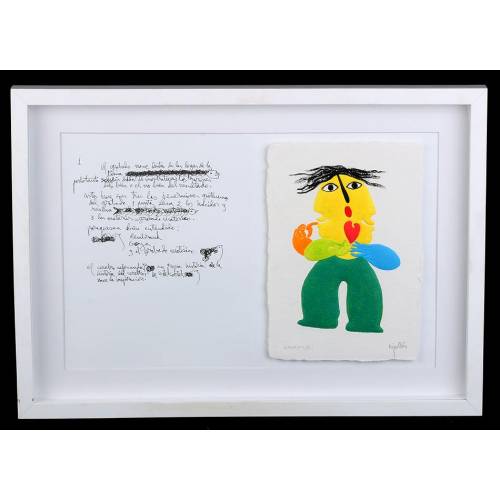
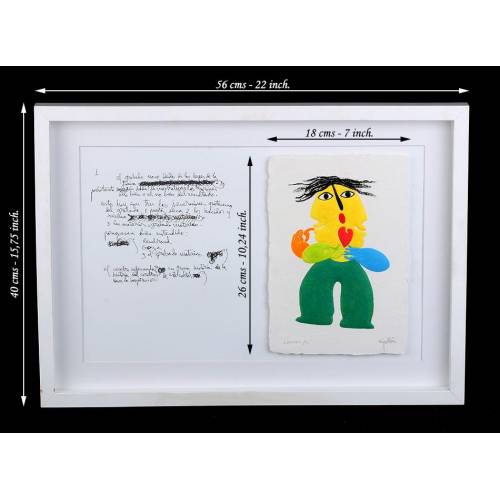
Limited-Edition Lithograph By Ripollés. 87/100 - AT-C-313 Limited-Edition Lithograph By...
Original lithograph by Juan García Ripollés. Signed and numbered. Part of a limited edition of 100 copies. Original lithograph by Juan García...
Sold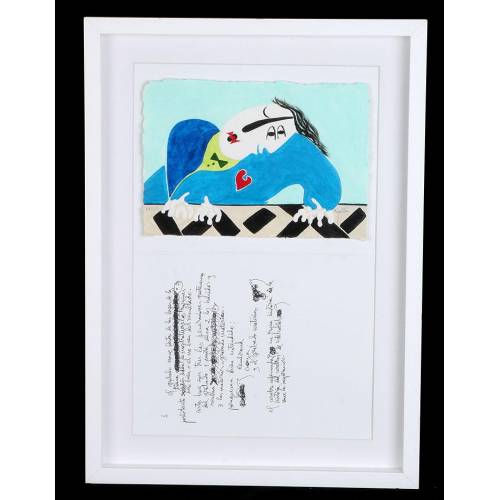
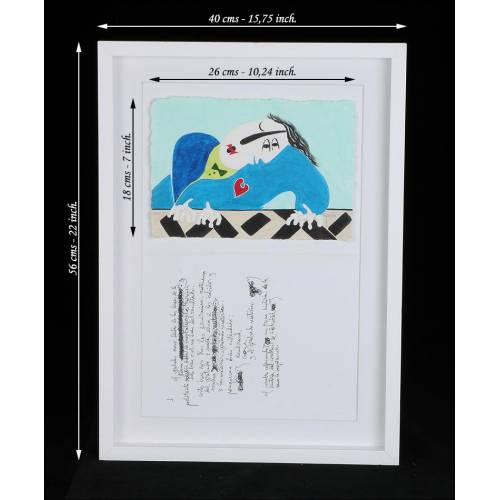
Original Lithograph By Ripollés. Limited Edition - AT-C-312 Original Lithograph By Ripollés....
Original lithograph by Juan García Ripollés. Signed and numbered. Part of a limited edition of 100 copies. Original lithograph by Juan García...
425,00 €

Antique Oil on Copper. Italian Bolognese School, c. 16201640 Antique Oil on Copper. Italian...
Antique Italian oil painting on copper, ca. 16201650. Bolognese school. Christ tied to the column, vibrant and devotional. With 19th-century gilt frame. Antique Italian oil painting on...
Sold
Specials
-

Saint Michael the Archangel Medallion, Cuzco School, Silver, Early 20th Century
Antique silver medallion from the...